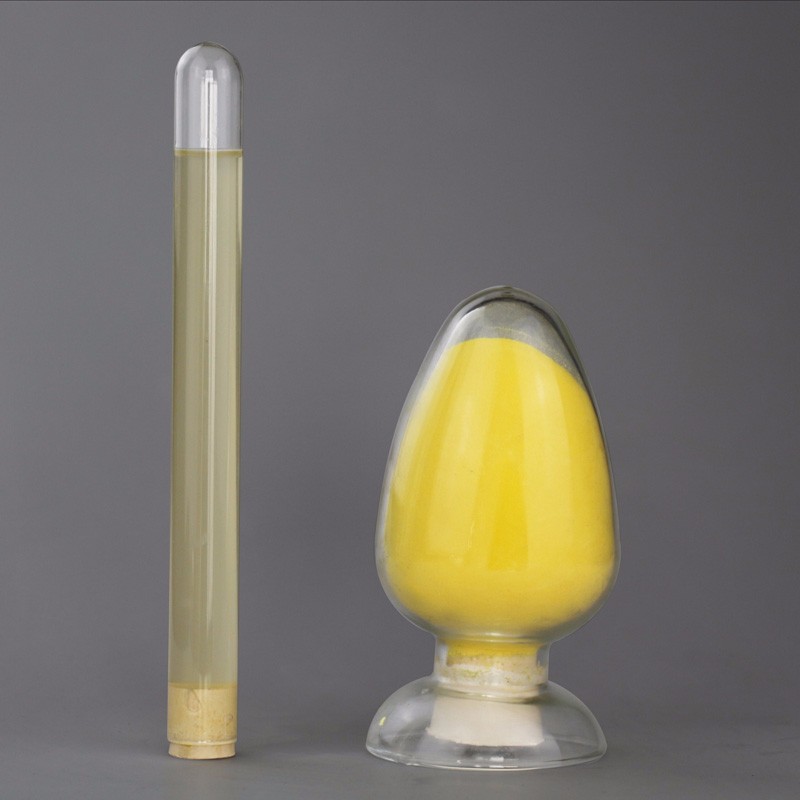
Polyaluminium chloride is a highly coagulating flocculant , capable of neutralizing microorganisms and colloidal particles. It causes these particles to stick together, agglomerating them and forming larger clots that facilitate their subsequent removal.
Main uses of polyaluminium chloride
- In certain areas of the food industry. For example, in the treatment of dairy products, vegetable oils, etc.
- In water purification systems
- In the agricultural, livestock or agri-food industry.
- In the wine industry .
- In the treatment of animal skins , to convert them into leather.
Instructions for use and optimal dosage of polyaluminium chloride
- It is usually applied using an adjustable dosing pump .
- It is advisable to create agitation at the point of application to facilitate rapid mixing .
- It may be advantageous to dose the product by dilution , injecting it into the line.
The optimal treatment dose is generally in the range of 1-5 mg/L expressed as Al, depending on the quality of the raw water.
We recommend carrying out an additional analytical control : of chloride and aluminium, so that the values at the points of delivery to the consumer are lower than the parametric values (VP) defined in RD 140/2003, of February 7. The Langelier index is also monitored .
NOTE: After treatment, the water must not be aggressive or encrusting.
Incompatibilities with other products and/or materials
Avoid contact with chlorite , hypochlorite , sulfite , galvanized metals , carbon steel . See product safety data sheet for more information.
IMPORTANT: The delivery time for this product will be longer than usual, specifically 7 to 10 business days. Please take this into account when placing your order.