Expanded Polystyrene (EPS) is technically defined as:
“Rigid cellular plastic material manufactured from the molding of pre-expanded beads of expandable polystyrene or one of its copolymers, which has a closed, air-filled cellular structure.”
The abbreviation EPS comes from Expanded PolyStyrene. This material is also known as Styrofoam or White Cork.
History
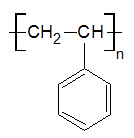
In 1831, a colourless liquid, styrene, was first isolated from tree bark. Today it is mostly obtained from petroleum.
Polystyrene was first synthesized on an industrial scale in 1930. Towards the end of the 1950s, the company BASF (Germany), on the initiative of Dr. F. Stastny, developed and began producing a new product: expandable polystyrene, under the brand name Styropor. That same year it was used as insulation in a building within the same BASF plant where the discovery was made. After 45 years, part of this material was removed in front of notaries and technicians from different European institutes, and it was subjected to all possible tests and verifications. The conclusion was that the material, after 45 years of use, maintained each and every one of its properties intact.
Properties and characteristics of expanded polystyrene
Density
Products and finished articles made from expanded polystyrene are characterised by being extremely light yet resistant. Depending on the application, densities range from 10kg/m3 to 35kg/m3.
Color
The natural color of expanded polystyrene is white, this is due to the refraction of light.
Mechanical resistance
The density of the material is closely related to the mechanical strength properties. The graphs below show the values achieved for these properties as a function of the apparent density of expanded polystyrene materials.
Thermal insulation
Expanded polystyrene products and materials have excellent thermal insulation capacity. In fact, many of its applications are directly related to this property: for example when it is used as an insulating material for the different enclosures of buildings or in the field of packaging of fresh and perishable foods such as fish boxes.
This good thermal insulation capacity is due to the structure of the material itself, which essentially consists of air trapped within a cellular structure made of polystyrene. Approximately 98% of the volume of the material is air and only 2% is solid matter (polystyrene), with still air being an excellent thermal insulator.

The thermal insulation capacity of a material is defined by its thermal conductivity coefficient, which in the case of EPS products varies, like the mechanical properties, with the apparent density.
Behavior towards water and water vapor.
Expanded polystyrene is not hygroscopic, unlike other materials in the insulation and packaging sector. Even when the material is completely immersed in water, absorption levels are minimal, with values ranging between 1% and 3% by volume (immersion test after 28 days).
Unlike what happens with water in a liquid state, water vapor can diffuse inside the cellular structure of EPS when a pressure and temperature gradient is established between both sides of the material.
Dimensional stability.
EPS products, like all materials, are subject to dimensional variations due to thermal influences. These variations are assessed by the coefficient of thermal expansion which, for EPS products, is independent of density and is within the range 5-7 x 10 -5 K -1 , i.e. between 0.05 and 0.07 mm . per metre of length and degree Kelvin.
As an example, a 2-metre-long expanded polystyrene thermal insulation sheet subjected to a temperature jump of 20ºC will experience a variation in length of 2 to 2.8 mm.
Temperature stability.
In addition to the phenomena of dimensional changes due to temperature variation described above, expanded polystyrene may undergo variations or alterations due to thermal action.
The temperature range in which this material can be used safely without affecting its properties has no limitations at the lower end (except for dimensional variations due to shrinkage). Regarding the upper end, the temperature limit for use is around 100ºC for short-term actions, and around 80ºC for continuous actions and with the material subjected to a load of 20 kPa.
Behavior against atmospheric factors.
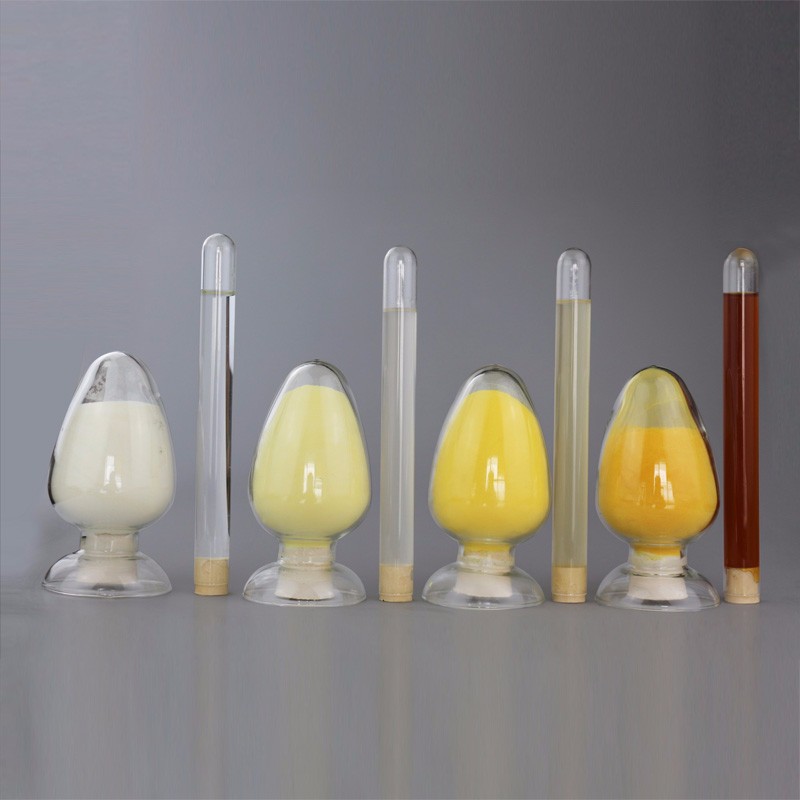
UV radiation is practically the only factor that is important. Under prolonged exposure to UV light, the EPS surface becomes yellowish and brittle, so that rain and wind can erode it. These effects can be avoided with simple measures in construction applications with paints, coatings and coverings.